Saturday Morning Rituals: Why Americans Wake Up for the Premier League Instead of MLS
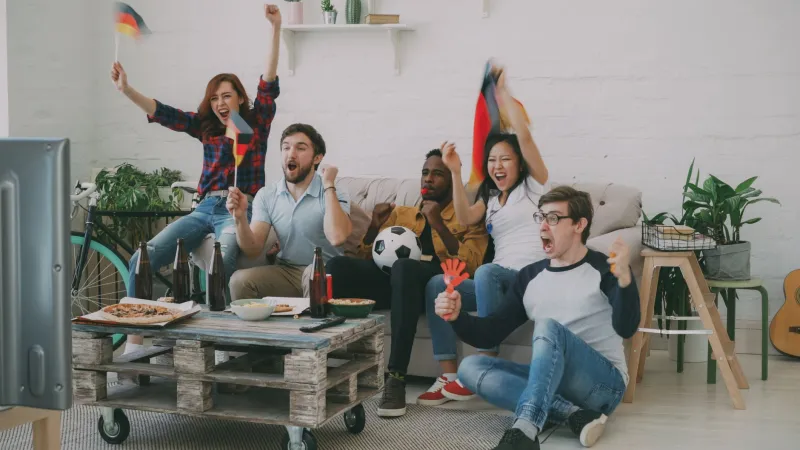
Set the scene: it's 7:45 on a Saturday morning. Someone in a Milwaukee apartment is already on their second coffee, laptop open, watching Arsenal press high against a mid-table Premier League side. Their phone buzzes with a group chat — friends in three different time zones reacting to the same match in real time. Later that afternoon, their hometown MLS club is playing a home fixture. They probably won't watch.
This is not a rare phenomenon. It is, by every available metric, the defining reality of American soccer fandom right now. And understanding it requires more than just shrugging at the obvious — that the Premier League has better players. The real story is messier, more psychological, and more interesting than that.
The Emotional Architecture of Fandom
Fandom isn't rational. Nobody chooses to love a sports team after a careful cost-benefit analysis. Attachment forms through exposure, narrative, identity, and community. And for American soccer fans who came of age in the 2000s and 2010s, the Premier League — and to a lesser extent La Liga and the Champions League — provided all of those things before MLS had the infrastructure to compete.
Fox Soccer, then NBC Sports, then Peacock served up Premier League football with genuine production quality, compelling storytelling, and the kind of punditry that treated the viewer as an intelligent adult. The Champions League offered high-drama knockout rounds that felt like events. La Liga had Messi and Ronaldo doing things that didn't seem physically possible. American fans didn't just watch these competitions — they built identities around them.
By the time MLS started growing its footprint and quality, many American fans already had deeply rooted allegiances to clubs an ocean away. Rewiring that emotional circuitry is not a marketing problem. It's a human psychology problem.
The Algorithm Knows What You Want
Social media has turbocharged this dynamic in ways that are genuinely hard to overstate. If you've ever liked a Premier League highlight on Instagram, you've essentially signed up for a steady drip of Premier League content forever. The algorithm is relentless and self-reinforcing. TikTok, YouTube, Twitter — all of them surface elite European football constantly, because that content generates massive engagement from a global audience that includes tens of millions of Americans.
MLS, by contrast, fights for algorithmic oxygen in a crowded space. A brilliant goal from a Columbus Crew midfielder might get a few thousand views. The same quality of goal in a Premier League kit gets a million. The disparity isn't just about quality — it's about the scale of the audience generating the engagement signals that platforms use to distribute content.
This creates a feedback loop that's genuinely difficult to break. American fans are immersed in European football content whether they seek it out or not, and that immersion deepens attachment. MLS content, even when it's excellent, struggles to penetrate the same distribution channels at the same volume.
Streaming Made It Too Easy
Let's be honest about the role of accessibility. A decade ago, watching European football required some commitment — cable packages, odd channel numbers, maybe a sketchy stream. Now, Peacock delivers the Premier League in HD on any device for less than a Netflix subscription. Paramount+ has Champions League covered. AppleTV+ has MLS. But the sheer volume and marketing muscle behind EPL coverage creates a gravitational pull that domestic soccer hasn't matched.
There's also a time zone quirk that, counterintuitively, works in Europe's favor. Those 7:30 and 10 a.m. weekend kickoffs slot into a part of the American morning that has no competing sports programming. The NFL is silent. College football hasn't started. Basketball isn't happening. European soccer owns Saturday and Sunday mornings in a way that MLS afternoon fixtures simply can't replicate — they're competing directly with NFL, college football, and every other weekend entertainment option.
The Narrative Gap
One underappreciated driver of European football's grip on American fans is the quality of its storylines. The Premier League title race. The relegation battle. The Champions League knockout rounds. These competitions have built-in dramatic structure that generates compelling narratives season after season. The human stories — a manager under pressure, a striker rediscovering form, a small club defying expectations — are packaged and told with extraordinary craft by broadcasters and journalists who've been honing this for decades.
MLS is getting better at this. The league has genuine storylines — the Messi effect in Miami alone generated more global media attention than anything MLS had ever seen. But the infrastructure for narrative storytelling around domestic soccer is still maturing. American sports media, long dominated by NFL and NBA voices, is only recently developing a deep bench of soccer journalists and broadcasters who can tell MLS stories with the same richness that the European game enjoys.
Should MLS Even Try to Compete?
Here's the provocative question that more people in American soccer are starting to ask openly: what if MLS stopped framing European leagues as the competition and started thinking of them as the on-ramp?
The evidence for this reframe is compelling. Surveys of MLS fans consistently show that a majority of them also follow European leagues. The American soccer fan is not choosing one or the other — they're consuming both, with European football as the primary obsession and MLS as the local supplement. That's not a failure of MLS. That's a fan base with an enormous appetite for the sport.
Leaning into complementary positioning — positioning MLS as the place where you see the next generation before they head to Europe, where you feel the energy of live soccer in your own city, where the connection to the community is immediate and physical — might be a more honest and ultimately more successful strategy than trying to manufacture a rivalry with the Premier League.
Apple's MLS Season Pass deal has already started moving in this direction, investing in production quality and storytelling that leans into the uniqueness of the American soccer experience rather than imitating what NBC does with the EPL.
What Comes Next
The Saturday morning Premier League ritual isn't going away. It's woven into the fabric of American soccer culture now, and honestly? That's not something to mourn. It means the sport has genuine, passionate fans who care deeply about the game in its highest form. The challenge for MLS — and for American soccer culture broadly — is to channel that passion into something that also has roots in American soil.
The fans waking up at 7 a.m. for Arsenal are the same fans who could be filling seats at an Atlanta United or Portland Timbers match on a Saturday night. They're not lost. They just need a reason to care about both. That's the real opportunity — and it's a massive one.