Between the Sticks and Beyond: How American Goalkeepers Are Finally Commanding Respect in Europe's Biggest Clubs
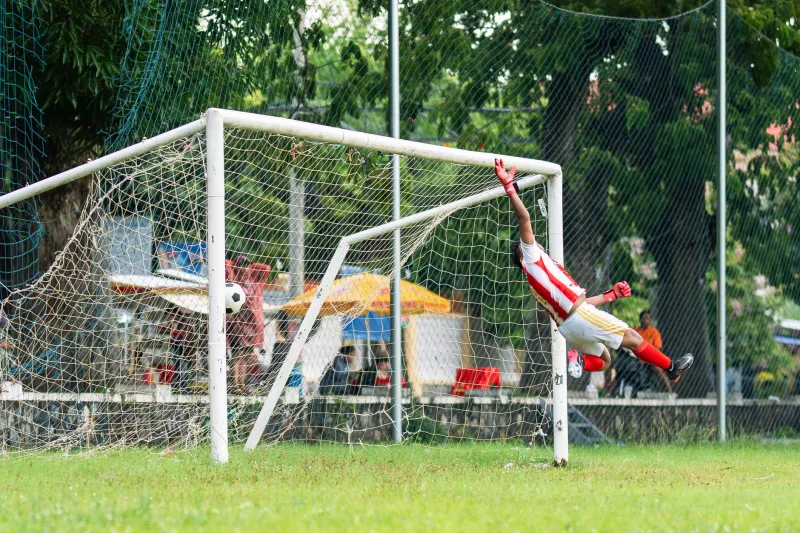
There used to be a quiet joke that circulated in European football circles — if you wanted to find a weakness in the American soccer project, just look between the posts. For years, that critique had enough truth to sting. The United States was producing dynamic wingers, athletic midfielders, and the occasional world-class forward, but goalkeepers? That was always someone else's department.
That story is changing fast. And if you've been paying attention to the 2024-25 European club season, you already know it.
The Old Narrative Is Dead
Let's be honest about where we've been. For most of the USMNT's modern history, the goalkeeper spot was either a reliable but unspectacular position or, worse, a liability. The country leaned on veterans who were serviceable at the international level but rarely challenged for starting spots at Champions League clubs. European scouts weren't exactly flooding MLS combines looking for the next great keeper.
But something shifted — quietly at first, then all at once. The shift didn't happen because of one breakout performance or one viral save. It happened because of infrastructure. Boring, unglamorous, absolutely essential infrastructure.
What Changed in the Academies
MLS's Homegrown Player Rule, introduced back in 2008, gets a lot of credit for transforming outfield development. What doesn't get talked about enough is how it supercharged goalkeeper-specific pipelines at clubs like FC Dallas, the LA Galaxy, and the New England Revolution.
These academies started hiring dedicated goalkeeper coaches — not just fitness coaches who doubled as keepers trainers, but specialists. Coaches who had played or trained at the highest levels in Europe and South America. Coaches who understood the modern demands of the position: distribution under pressure, sweeper-keeper responsibilities, command of the high line, and the psychological resilience required to perform in front of 70,000 fans in a hostile stadium.
The technical curriculum changed too. Young American keepers in elite academies are now drilling with the same methodology you'd find at Ajax or Atletico Madrid youth setups. Footwork patterns. Distribution angles. Decision-making under simulated pressure. The old model — stand in goal, stop the ball — has been completely retired.
The Players Carrying the Flag
You can't talk about this revolution without naming names. Matt Turner's run at Arsenal and now Nottingham Forest proved that an American keeper could hold a starting spot in the Premier League without embarrassing himself or his country. He's not a backup warming the bench — he's a reliable top-flight performer who makes routine saves look routine, which is actually harder than it sounds.
Then there's Zack Steffen, whose career trajectory — despite some bumps — showed that American keepers could be trusted in the Champions League. His time at Manchester City opened doors that had previously been bolted shut.
But the more exciting story is what's coming next. The next tier of American goalkeepers — players in their early-to-mid twenties currently working their way through second-division European clubs and earning loan moves to bigger stages — represents the deepest pool of keeper talent this country has ever produced at the same time. That's not hype. That's depth.
The Sweeper-Keeper Evolution
One reason American keepers are resonating in modern European football is surprisingly tactical. The game has moved toward goalkeepers who function almost like an eleventh outfield player — comfortable receiving the ball under pressure, capable of launching attacks with precise long distribution, and willing to sprint off their line to act as a defensive sweeper.
American players, raised in a culture that prizes athleticism and often exposed to multiple sports in their formative years, tend to develop the physical tools for this role naturally. Long-range kicking, aerial dominance, quick reflexes — these aren't weaknesses in the American athletic profile. They're strengths. The academies are finally teaching keepers how to weaponize those strengths within a modern tactical framework.
The Mental Game Gets Its Due
One underrated element of this transformation is the growing emphasis on sports psychology within goalkeeper development. Elite keeper coaches now talk openly about the mental architecture of the position — how a keeper must process a goal conceded in real time, reset emotionally, and perform at peak level thirty seconds later.
This is hard. Ask any keeper who's played at a high level and they'll tell you the mental side is as demanding as the technical side. American academies have started embedding sports psychologists into their goalkeeper programs, not as a luxury, but as a core component of development. That's a cultural shift that doesn't show up in highlight reels but absolutely shows up in performance when the stakes are highest.
What It Means for the USMNT
The downstream effect for the national team is significant. For years, the USMNT's goalkeeper situation going into major tournaments carried a quiet anxiety. Was the starter truly reliable? What was the backup situation? Could the program withstand an injury to the first choice?
That anxiety is fading. The current generation of American keepers competing for spots in the national team picture gives Gregg Berhalter's successor a genuine selection headache — and that's exactly the kind of problem you want to have. Competition for the starting jersey between legitimately qualified candidates is a sign of a healthy program.
With the 2026 World Cup on home soil approaching faster than any of us want to admit, having two or three keepers who could plausibly start for mid-table European clubs isn't just encouraging. It's essential.
The Work Isn't Done
None of this is a victory lap. There's still a gap between American keeper development and what the very best programs in Germany, Spain, and Brazil are producing. The pipeline needs to keep running. The investment in specialist coaching needs to continue and deepen. Young keepers need European loan opportunities earlier in their careers, not later.
But for the first time in a long time, the question isn't whether the US can produce a world-class goalkeeper. The question is which one steps up first.
That's a very different conversation. And honestly? It's about time we're having it.