Cleats, Cash, and Commitment: Inside America's Youth Soccer Spending Boom

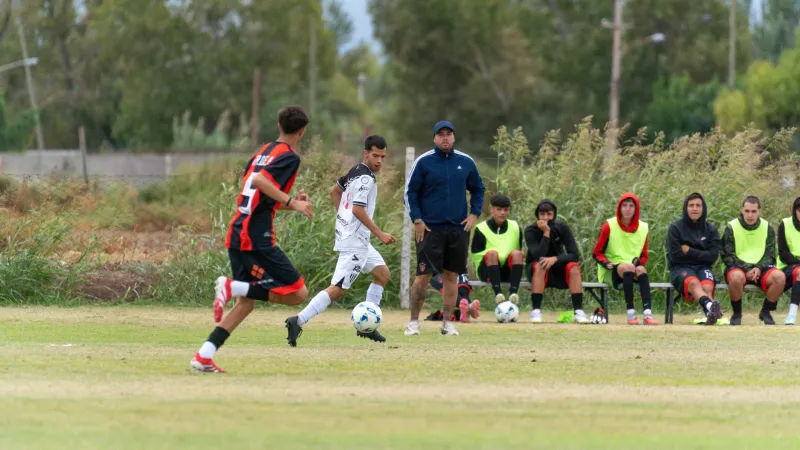
There's a scene playing out every weekend across suburban America that has become as familiar as tailgate grills and Friday night lights. A minivan pulls into a freshly lined turf complex somewhere off a highway exit. Out spills a twelve-year-old in a $200 kit, a duffel bag full of recovery gear, and parents who've already mapped the nearest Starbucks for the long day ahead. Welcome to the youth soccer economy — and it is absolutely booming.
According to industry estimates, American families spend somewhere north of $19 billion annually on youth sports, and soccer claims a fat slice of that pie. Club fees, tournament travel, private coaching sessions, specialized camps — it adds up fast. For many households, it's not just an extracurricular. It's a financial commitment on par with a second mortgage.
The Price of the Dream
Let's talk real numbers. A mid-tier club soccer program in a city like Dallas, Denver, or Charlotte might run a family anywhere from $3,000 to $6,000 per year once you fold in registration fees, uniforms, and local tournaments. Step up to an elite academy — one of the clubs feeding into the MLS NEXT pathway — and that figure can balloon past $15,000 when you account for travel to showcase events in places like Las Vegas or Orlando.
Jennifer Caldwell, a mom from outside Columbus, Ohio, knows that math intimately. Her thirteen-year-old son plays for a regional academy that competes nationally. "We budget for it like we budget for the mortgage," she told us. "Two flights, hotel rooms, tournament fees — one trip to a showcase event can be $1,500 easy. And that's just one trip."
For families like the Caldwells — dual-income, college-educated, comfortable but not wealthy — the spending is a stretch. But they see it as an investment. In development, in opportunity, maybe even in a scholarship down the road. The College Scholarship Industrial Complex, as some coaches have started calling it half-jokingly, is a huge driver of the whole system.
Who Gets Left Behind
Here's where it gets uncomfortable. The youth soccer ecosystem in America has quietly become one of the most economically stratified environments in all of youth sports. Unlike basketball, where a pair of sneakers and a public court can launch a career, or even baseball, where Little League still has genuine grassroots infrastructure, competitive soccer increasingly demands access to resources that price out entire communities.
Marcos Rivera coaches a recreational league in South Central Los Angeles. He's been doing it for fifteen years, and he's watched the talent pipeline shift in real time. "I've had kids come through here who were special — genuinely special," he says. "But their families couldn't afford the club fees, couldn't take time off work for tournaments in Arizona or Texas. Those kids just... stopped playing competitive soccer. Some of them disappeared from the sport entirely."
The gap isn't just about money. It's about time, logistics, and the invisible labor of youth sports parenting — the scheduling, the travel coordination, the social navigation of club culture. Families working multiple jobs, or without reliable transportation, face barriers that a scholarship waiver alone can't solve.
Some organizations are trying. The U.S. Soccer Foundation's Soccer for Success program has reached over a million kids in underserved communities. Several MLS clubs have invested in free or subsidized youth academies. But critics argue these efforts, while meaningful, exist at the margins of a system that is fundamentally built for families with disposable income.
The Private Coaching Industrial Complex
Beyond club programs, there's another layer to this economy: the rise of the private trainer. In cities with serious soccer cultures — think Portland, Atlanta, Seattle, and Miami — private skills coaches are booked out weeks in advance. Sessions run $75 to $150 an hour. Some high-end trainers in major markets charge significantly more.
The pitch is compelling: personalized attention, technical development, an edge in an increasingly competitive environment. And parents, understandably, want every advantage for their kids. But developmental coaches and sports scientists increasingly question whether early specialization and high-volume private training actually produces better players — or just more stressed-out twelve-year-olds.
"The research on early sports specialization is pretty clear," says Dr. Angela Tran, a sports performance researcher based in Chicago. "Kids who play multiple sports, who have unstructured time to just play, often develop better long-term athleticism. But that's a hard sell when you're watching another kid on your son's team show up with a private coach and a reel."
Does the Investment Actually Pay Off?
Here's the honest answer: for most families, not in the way they hope. The odds of a youth soccer player reaching the professional level are vanishingly small — estimates suggest fewer than one percent of high school players ever suit up for a professional club. College scholarships, often cited as the real ROI, are frequently partial and exist in a highly competitive pool.
That doesn't mean the investment is worthless. Kids who play competitive soccer gain fitness, discipline, teamwork, and resilience. Many parents are clear-eyed about this — they're not betting on a pro contract, they're buying a development experience. That's a legitimate choice, if you can afford it.
But the systemic question lingers: is America building the best possible soccer future when its development pipeline is filtered so heavily through economic access? Countries that punch above their weight in world soccer — Uruguay, Croatia, Portugal — didn't get there by making the game expensive. They got there by making it unavoidable.
What's Actually Changing
There are some genuinely encouraging shifts happening. MLS NEXT has pushed clubs to implement more rigorous development standards and has opened pathways that bypass the traditional college route. U.S. Soccer's Homegrown Player rules have incentivized MLS clubs to find and develop local talent. And a growing chorus of coaches, administrators, and parents are starting to push back against the tournament-heavy, travel-obsessed model that dominates the current landscape.
The Soccer Dad Economy isn't going anywhere. American families love the game, and they're willing to invest in it. But the sport's future depends on whether that investment can be broadened, democratized, and redirected toward actual development rather than just expensive participation. The beautiful game deserves a more beautiful pathway into it.