Side Piece, Main Drama: How American Fans' Backup Clubs Are Stealing the Whole Show
It started innocently enough. Maybe you needed a team to root for during Champions League nights when your club was already knocked out. Maybe a friend dragged you into a Bundesliga rabbit hole at 2 a.m. on a Tuesday. Maybe you just liked the jersey colors. Whatever the origin story, most American soccer fans can point to a secondary club — a team they never officially "chose" — that has quietly, completely taken over their emotional bandwidth.
And here's the wild part: for a lot of fans, that accidental second team is now causing more drama than the club they'd die for.
The Accidental Allegiance Pipeline
American soccer fandom is uniquely built for this kind of split loyalty. Unlike fans in England or Spain who often inherit a club through family bloodlines and geographic identity, many fans in the US came to the sport as adults — or at least as older teenagers — and built their fandom through exposure rather than inheritance. You watched a team on a random streaming Sunday. You played FIFA and kept choosing the same club. You fell down a YouTube compilation hole and suddenly Napoli's attacking style felt personal.
The first team usually comes with weight. It's the one you publicly claim, the crest you'd tattoo, the scarf you wear to the watch party. But the second team? That one slips in through the side door with zero pressure attached. There's no identity on the line. No reputation to protect. You can love them freely, chaotically, without any of the baggage that comes with your primary allegiance.
And that freedom, it turns out, is exactly what makes things go sideways.
Why the "No Stakes" Team Has All the Stakes
Psychologically, the secondary club relationship is almost designed to intensify. When fans don't feel like their core identity is wrapped up in a result, they're more willing to go all-in emotionally in the moment. There's less self-protective distancing. You don't brace yourself the same way. You haven't built the psychological calluses that come from years of heartbreak with your main club.
So when your casual second team loses a final, or gets relegated, or sells the player you loved most — it hits differently. Harder, sometimes. Because you weren't ready for it.
Fans in online communities describe it constantly. Someone shows up in a Discord server absolutely devastated about a result from a team they "don't even really follow." The thread fills up with others nodding along, totally understanding. The secondary team becomes a space where raw emotion lives because the armor isn't fully on.
There's also a permission structure at play. Admitting you're wrecked over your primary team losing can feel vulnerable, like you're exposing how much of yourself you've staked on a group of athletes you'll never meet. But complaining loudly and passionately about your second team? That somehow feels safer. Less embarrassing. More socially acceptable to be openly unhinged about.
Social Media Turned These Side Loyalties Into Legit Feuds
Here's where things get genuinely interesting — and genuinely messy. Social media, particularly X (formerly Twitter), Reddit, and TikTok, has given secondary allegiances a megaphone. And fans are using it.
A few years ago, your complicated feelings about your backup club lived mostly in your own head or in small group chats. Now they play out publicly, in real time, in front of thousands of people who are doing the exact same thing. When your second team beats someone else's second team, the trash talk is ferocious — arguably more ferocious than anything involving primary clubs — because the emotional investment is less defended and the stakes feel lower, which somehow makes people bolder.
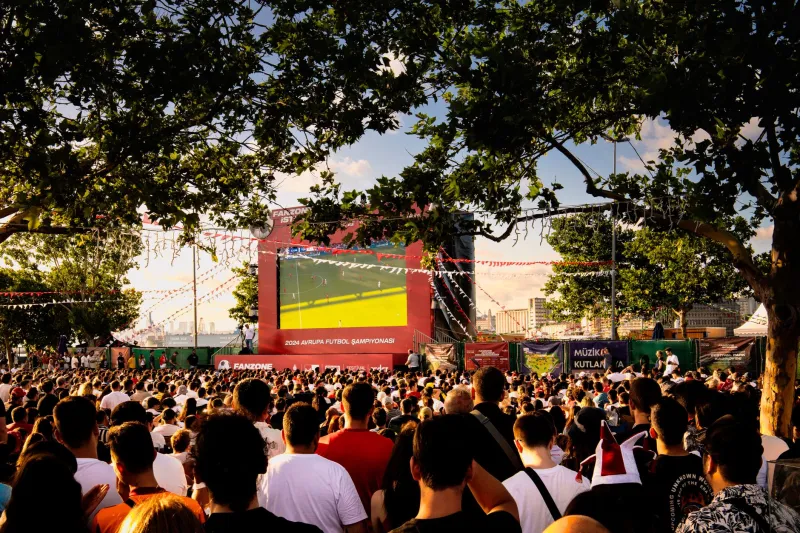
Watch any major European midweek fixture on a US-centric soccer Twitter night and you'll see it. Fans who primarily support MLS clubs going absolutely feral about a Champions League result involving their European "side piece." The arguments aren't polite. The memes aren't gentle. These are real feuds, and they're being amplified by algorithms that reward heat over nuance.
Some fan communities have started openly acknowledging this dynamic. Subreddits dedicated to specific clubs regularly get waves of Americans who preface their posts with some version of "I know this isn't my main team, but..." before delivering a wall of text that is absolutely, unmistakably the work of someone who is fully invested.
The Conflict Within Fan Circles
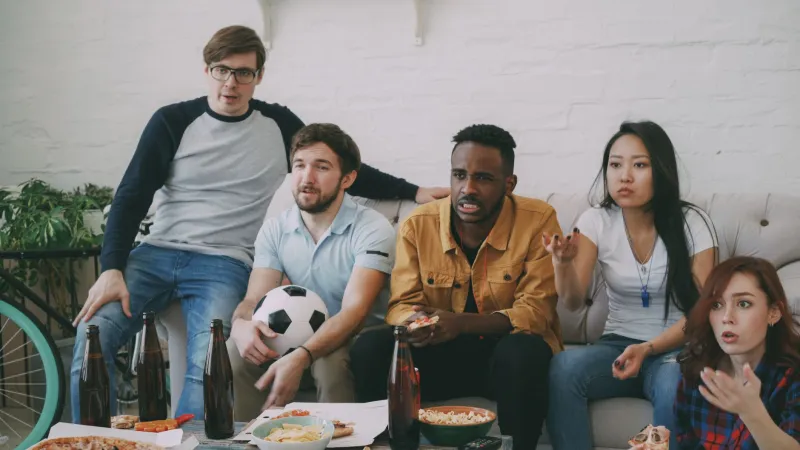
The drama doesn't stay external. Inside friend groups and watch party regulars, the secondary club situation has started generating its own friction. Two people who happily share a primary allegiance can find themselves in genuine conflict when their backup teams clash. It's almost funnier because of how unexpected it is — you agreed on everything, and then Atletico Madrid vs. Bayer Leverkusen happened and now there's a thing.
Long-running group chats have fractured over this. Watch parties have gotten awkward. The etiquette around secondary team loyalty is genuinely unwritten, which means everyone is making up the rules as they go and almost nobody agrees on what's acceptable.
Is it okay to trash talk a friend's second team? Are you allowed to be as upset about a second-team loss as a primary one? Can you switch second teams, or does that make you a fraud? These questions don't have clean answers, and that ambiguity is fertile ground for exactly the kind of low-stakes-but-somehow-high-stakes drama that soccer fan culture thrives on.
The Team You Didn't Choose Ends Up Choosing You
There's something almost poetic about it, honestly. American soccer fans spend a lot of energy constructing their primary fandom — researching clubs, debating which league deserves their attention, carefully selecting the identity they want to carry. And then some random team sneaks in through a Tuesday night game, or a highlight reel, or a friend's enthusiasm, and just quietly takes root.
The accidental rival isn't an accident at all, once you look at it closely. It's the team that got in before you could overthink it. The one you responded to before the analytical brain kicked in. And because there was no deliberate decision-making involved, the connection is arguably more instinctive — more purely emotional — than the one you constructed on purpose.
For a country still building its soccer culture from the ground up, this might actually be one of the most authentically football things American fans have going. The sport has always had a way of choosing you back. Your second team is just proof that it works.
So yeah — go ahead and pretend your backup club doesn't mean that much to you. Nobody in the group chat is buying it anymore.