Strangers on a Server: How Soccer Turned Online Acquaintances Into Lifelong Ride-or-Dies
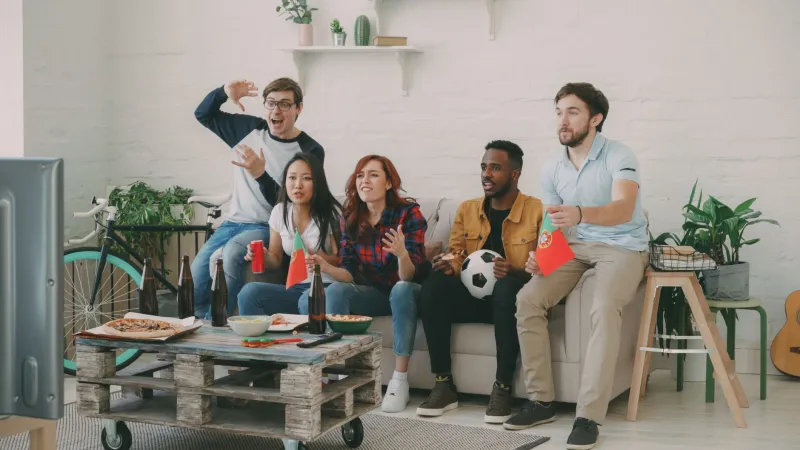
There's a guy named Marcus from Portland who cried when Pulisic scored against Iran at the 2022 World Cup. He wasn't alone in that moment — not emotionally, anyway. A dozen people in a Discord server he'd been part of for three years were losing their minds right alongside him, typing in all caps, dropping voice chat screams into the void, sending memes before the net had even stopped moving. Some of them he'd never met in person. One he still hasn't. But Marcus will tell you, without hesitation, that those people are some of his closest friends.
This isn't a rare story. It's practically a rite of passage for American soccer fans.
The Weird Magic of Shared Obsession
Soccer fandom in the US has always had a slightly underground quality to it. For a long time, loving the sport here meant finding your people in unusual places — message boards, early subreddits, fan blogs that updated at 2 a.m. after a Champions League midweek result. That shared sense of being a niche within a niche created an intimacy that's hard to replicate.
When you bond with someone over the NFL, you're bonding over something tens of millions of Americans already share. It's a common language. But when you find another person at your office who also woke up at 7:30 a.m. on a Saturday to watch Brentford vs. Wolves, something clicks differently. There's a recognition. A you too? moment that carries real weight.
Psychologists who study parasocial relationships and fan communities point to a concept called "identity fusion" — the idea that when people share intense, emotionally charged experiences, the boundary between "self" and "group" starts to blur. Soccer, more than most American sports, creates those high-stakes emotional moments on a near-weekly basis. And for fans in the US, often watching alone in their living rooms while the rest of the country sleeps, the online community becomes the stadium they don't have access to.
Discord Didn't Invent This — It Just Made It Better
Ask any American soccer fan over 30 and they'll tell you about BigSoccer forums, or early Twitter soccer communities, or the email chains that passed around illegal streams before the sport had proper broadcast deals. The impulse to connect has always been there. The tools just keep getting sharper.
Discord, in particular, has become the clubhouse of choice. Servers organized around specific clubs, national teams, fantasy leagues, or just general soccer chaos have become places where fans spend genuine time. Not just during matches — all week. Debating transfers, sharing training ground footage, roasting each other's starting lineup choices, checking in on each other's lives.
That last part matters more than it sounds. Because what starts as soccer talk almost always bleeds into everything else. Someone mentions they're stressed about a job interview. Someone else shares that their dad is sick. The group shows up. The game was just the door — the friendship is the house.
Fantasy Leagues as Relationship Infrastructure
If Discord is the clubhouse, fantasy soccer is the glue. Platforms like FPL (Fantasy Premier League) have quietly built some of the most durable online friendships in American sports culture. Running a league with the same core group for four or five seasons creates something that starts to feel like a standing commitment — a recurring reason to stay in contact, to trash-talk, to celebrate, to commiserate.
There's a woman named Destiny from Atlanta who joined an FPL league through a Facebook group in 2018. She'd never played fantasy soccer before. By the end of that first season, she'd developed a genuine friendship with three people in the league — one in Seattle, one in Minneapolis, one in New Jersey. They started a group chat. The group chat evolved. Last summer, they all traveled together to London for the first time to watch actual Premier League matches in person.
"We'd been talking every single week for years," she said. "Meeting them in real life felt like the least dramatic thing in the world. We already knew each other."
That's the paradox at the heart of this whole thing. The people who feel like strangers on paper — someone you've technically never met — can end up being the ones who know your team loyalty, your sense of humor, your hot takes, your actual opinions, better than coworkers you've sat next to for a decade.
What Soccer Gets Right That Other Sports Miss
It's worth asking: why soccer specifically? Why does this sport seem to generate these kinds of deep digital communities more than, say, basketball Twitter or NFL Reddit?
Part of it is the global footprint. American soccer fans aren't just connecting with other Americans — they're connecting with fans in England, Argentina, Nigeria, South Korea. The sport creates a genuinely international community, and there's something about that scale and diversity that makes the connections feel bigger than just sports talk.
Part of it is also the calendar. Soccer never really stops. There's always a transfer window, a cup competition, an international break, a managerial sacking to process. The conversation has no offseason, which means the relationships don't either.
And part of it — maybe the biggest part — is that American soccer fans have had to work for their fandom in a way fans of the major domestic leagues haven't. Finding your people required effort. And things you work for tend to stick.
The Real-World Payoff
The friendships that start online don't always stay there. Stories like Destiny's are becoming more common — groups of people who met through soccer communities showing up for each other at matches, at weddings, during hard times.
There are supporter groups across the country that started as online communities and evolved into physical spaces. Watch parties that began as a dozen strangers in a bar are now organized gatherings with names, traditions, and inside jokes that go back years. The screen was just the starting line.
For a sport that's still fighting for mainstream legitimacy in the American market, this grassroots connective tissue might be its most underrated asset. The Premier League's TV deals matter. MLS expansion matters. But the reason soccer keeps growing here, the reason young fans are converting at higher rates than ever, has a lot to do with the communities they find when they go looking.
You don't just discover a sport. You discover the people who love it the same way you do. And sometimes those people, however far away they live, become the ones you call first when your team finally wins something big.
Or when they break your heart. Which, honestly, happens more often.