Cheering With One Eye Closed: The Complicated Truth About Being a Soccer Parent Who Loves Another Team More

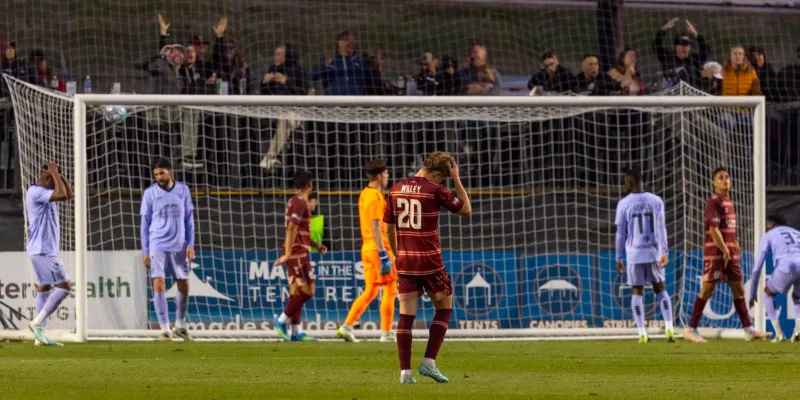
Let's set the scene. It's 9 a.m. on a Saturday. You're standing on the sideline of a damp recreational field somewhere in suburban Ohio, paper coffee cup in hand, watching your eight-year-old chase a ball with the enthusiasm of a golden retriever and roughly the same tactical awareness. You love your kid. You are proud of your kid. You are also, if you're being completely honest, a little bit annoyed that kickoff at Anfield is happening in exactly twelve minutes and you have absolutely no way to watch it.
Welcome to the Soccer Parent Paradox — a very real, very underreported tension that lives inside thousands of American households where the beautiful game has taken root on two completely different levels at the same time.
When Your Heart Lives in Two Time Zones
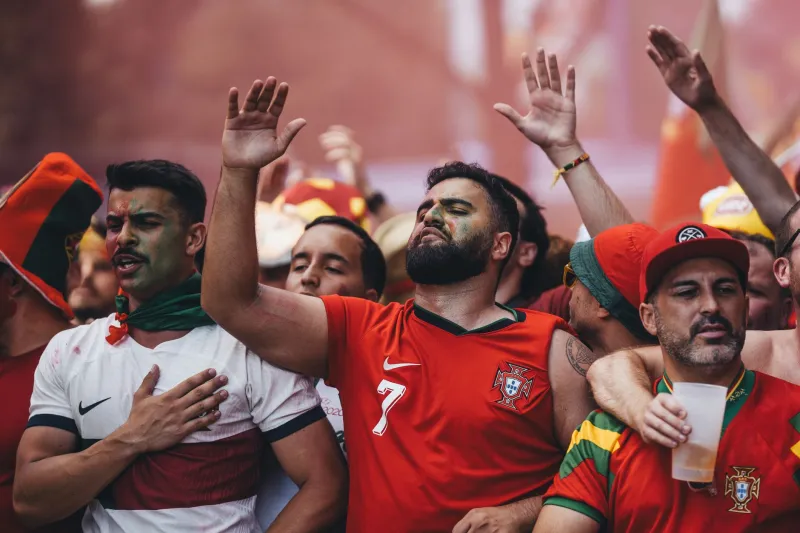
American soccer fandom didn't build itself around local teams the way baseball or football did. For a lot of fans who grew up in the 90s and early 2000s, the entry point was the Premier League on cable TV, or a World Cup watched at a relative's house, or a worn-out copy of FIFA on a gaming console. The emotional attachment formed around clubs thousands of miles away — Manchester United, Barcelona, Juventus, Club América — long before MLS had the cultural weight to compete.
Fast forward fifteen years and those same fans are now parents. Their kids have discovered soccer through school, through neighborhood pickup games, through the same FIFA franchise on a newer console. And those kids are genuinely excited to play. So the parents sign them up. They buy the cleats, pay the registration fees, coordinate the carpool schedule.
But here's the thing nobody talks about at the team picnic: a lot of those parents don't actually care that much about the local youth club their child plays for. Not in the same visceral, identity-level way they care about their Premier League side. And that creates a strange kind of guilt.
The Guilt Is Real — And Kind of Funny
Talk to enough soccer parents and a pattern emerges. There's a specific brand of internal conflict that comes with watching your child's team concede a soft goal while simultaneously knowing that Erling Haaland just scored in the 89th minute and you won't find out until you check your phone in the parking lot.
"I feel terrible saying this out loud," one dad from outside Nashville admitted in an online soccer forum, "but when my daughter's team loses, I feel bad for her. When City loses, I feel bad for myself. Those are genuinely different emotions and one of them is way more intense."
That distinction matters. The love for your child's team is rooted in parental support — it's about them, not you. The love for your club is rooted in personal identity. It's tribal. It's irrational. It was there before your kid was born and it'll be there long after they've aged out of youth soccer and moved on to other things.
Some parents have started quietly live-streaming matches on their phones during youth games, earbuds in one ear, eyes darting between the field and a 4-inch screen. Others have restructured entire family schedules around Premier League fixtures, treating a 7:30 a.m. kickoff like a non-negotiable standing appointment. A few have even admitted — in hushed, slightly ashamed tones — that they've felt a flicker of relief when a youth game gets rained out, because it means they can watch the derby uninterrupted.
Nobody is proud of that last one. But it happens.
What It Reveals About Soccer's Place in American Culture
The Soccer Parent Paradox isn't really about bad parenting or misplaced priorities. What it actually reveals is how deeply and specifically soccer fandom has embedded itself in American life — and how differently it operates compared to traditional American sports culture.
With football or baseball, the local team is usually the emotional anchor. You root for the Cowboys or the Red Sox because geography and family history put that team in front of you first. The attachment is proximity-based.
Soccer fandom in America often works the opposite way. The attachment formed around a distant club first — one you chose based on a player you admired, a jersey you thought looked cool, a friend who introduced you to the sport. By the time MLS expanded and youth leagues proliferated, you already had a soccer home. It just wasn't anywhere near your actual home.
So when your kid joins a team, you support them completely as a parent. But you don't automatically transfer your soccer soul to the FC Whatever Rec League squad. Those are two separate things, and American soccer culture is only beginning to develop the language to talk about that distinction.
The Silver Lining on the Sideline
Here's where the story gets genuinely heartwarming, though. A lot of soccer parents are discovering that their divided loyalty is actually pulling them deeper into the sport in unexpected ways.
Because they understand the game — because they've spent years watching elite-level soccer — they're often the parent who can actually explain to their kid why the press broke down, or why holding a high line is a gamble, or what it means to play out from the back. The tactical vocabulary they built watching Champions League nights is showing up in conversations on the drive home from a U-12 match.
And kids notice when a parent genuinely gets the sport versus when they're just cheering to be supportive. That shared language — that mutual love for the game itself, even if it's pointed in different directions — can become a real point of connection.
Some parents have even started using their club fandom as a teaching tool. Pulling up clips of their favorite team to show their kid how a winger tracks back, or how a central midfielder distributes under pressure. The love for one team becomes a gateway into a deeper conversation about soccer as a whole.
Two Loyalties, One Beautiful Game
The Soccer Parent Paradox isn't going away. If anything, it's going to get more common as soccer continues to grow in America and more parents find themselves straddling the line between devoted club supporter and supportive youth sports parent.
But maybe that's okay. Maybe it's even good. The fact that millions of American parents are experiencing this particular internal tug-of-war is proof that soccer has done something no other sport has quite managed — it's created fans who love the game itself so completely that it shows up in multiple forms across their entire lives.
You can cheer for your kid on a cold Saturday morning and still feel your stomach drop when your team concedes in stoppage time. Both of those things can be true at once. That's not a contradiction. That's just what it looks like when soccer gets all the way in.